
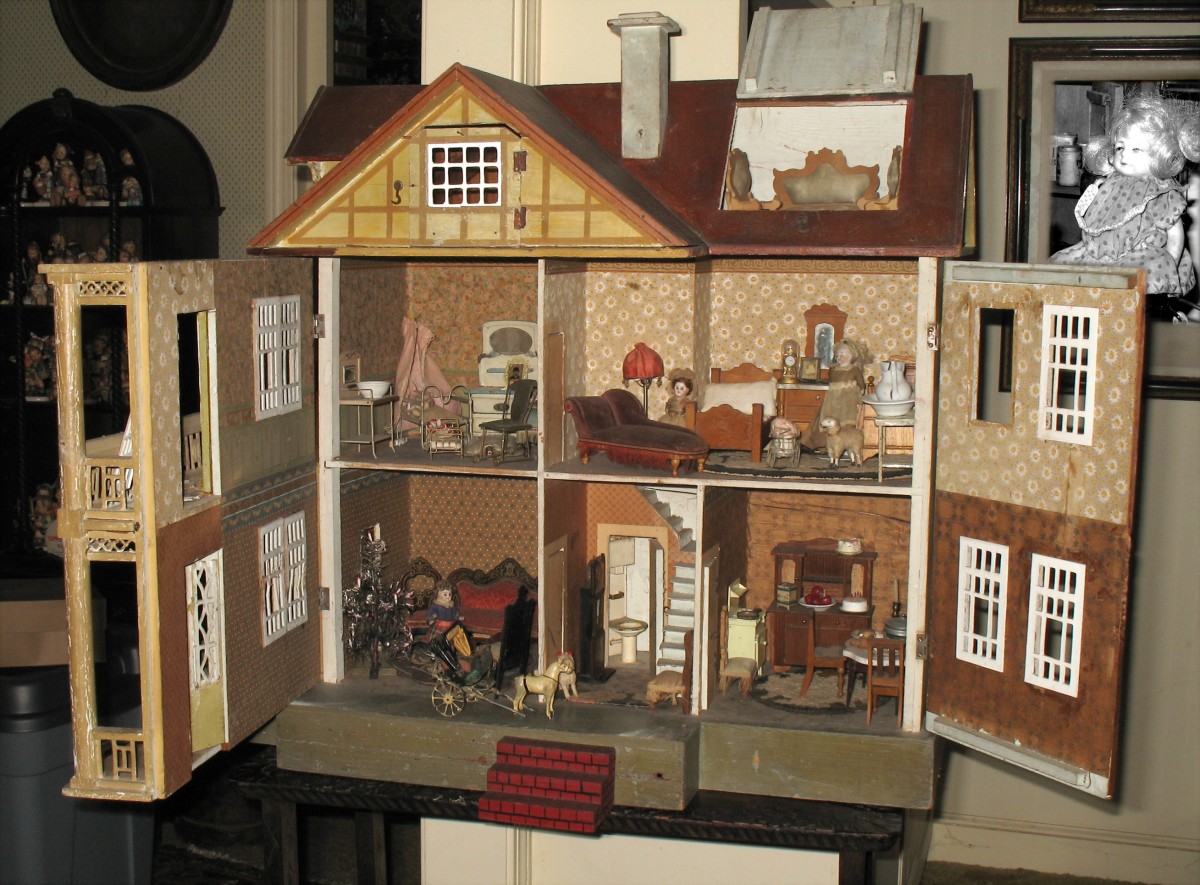
Antique English Dollhouse
What Miniature Dollhouses Represent
Barbie dollhouses may be the modern version of classic miniature homes, but, traditionally, handcrafted miniatures were not toys that children played with. Miniature homes represented many things to different people. They were:
- Moral instruction ‘tools’ for young girls. Dollhouses were used to teach girls domestic and home improvement skills—the things required of them when they got married and had to run their own homes. The handcrafted home interiors had all the imaginable household items needed, like porcelain, napkins, sweepers and dusters, pots and pans, and even things as simple as tea cosies.
- Priceless collectables. Many upscale dollhouses were owned by wealthy adults who loved, genuinely appreciated, and collected these beautiful, intricate museum-worthy works of art for their own pleasure.
- Entertainment and conversational pieces. Nobles displayed miniature houses to delight their guests and show off their superb taste in art.
- Investment opportunities. Some owners amassed their miniature collections, knowing they would eventually become antique keepsakes of extremely high value.
- Structures of personal fascination. Dollhouses provided an eye into a miniature world of unimaginable and luxurious living. It is so inexplicably satisfying to see familiar things in miniature forms, scales, and sizes.
- Opportunities for voyeurism. These mini-worlds offered a sense of playing god, with the viewer being the ruler of a tiny yet distinct world filled with little people and things.
In a world where most millennials cannot even think of purchasing real property, it is no real wonder that dollhouses remain, for many of us, a gentle bit of wish fulfilment.
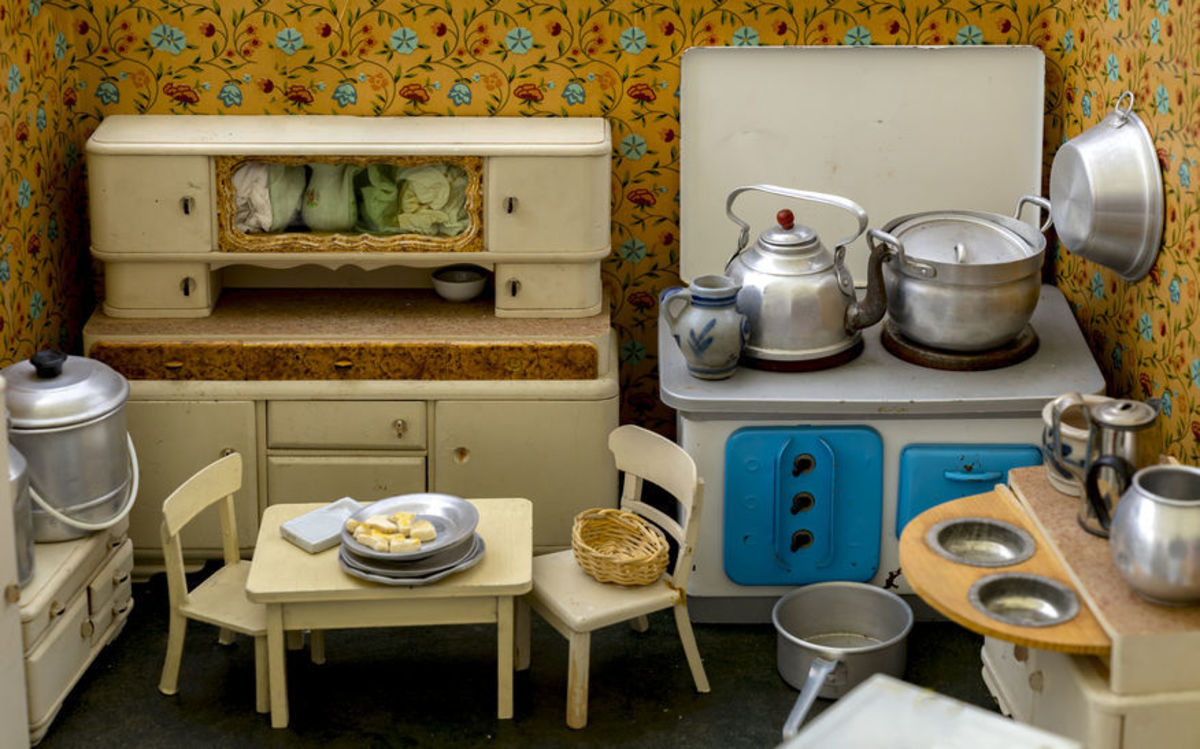
Vintage miniature home kitchen with everything a young girl needs to practice cooking, cleaning, and organising.
Classic Miniature Home Styles
To enthusiasts and collectors, having a choice of architectural styles is part of the essence of collecting miniature homes. While some collectors only go for closed-crafted miniature houses without a view of the inside, others prefer homes with viewable rooms, where each room is intricately designed with furnishings of different periods. Every detail of the interior is included in the structure, including wallpaper, floor coverings, and tiny light fittings.
Some popular architectural and interior design styles for miniature houses include:
- Colonial
- Victorian
- Art deco
- Edwardian
- Mid-century
- A-frames and cabins
Closed vs. Open Dollhouses
A closed-crafted home only provides an external view. You can't see into any of the rooms. An open home will have viewable rooms.
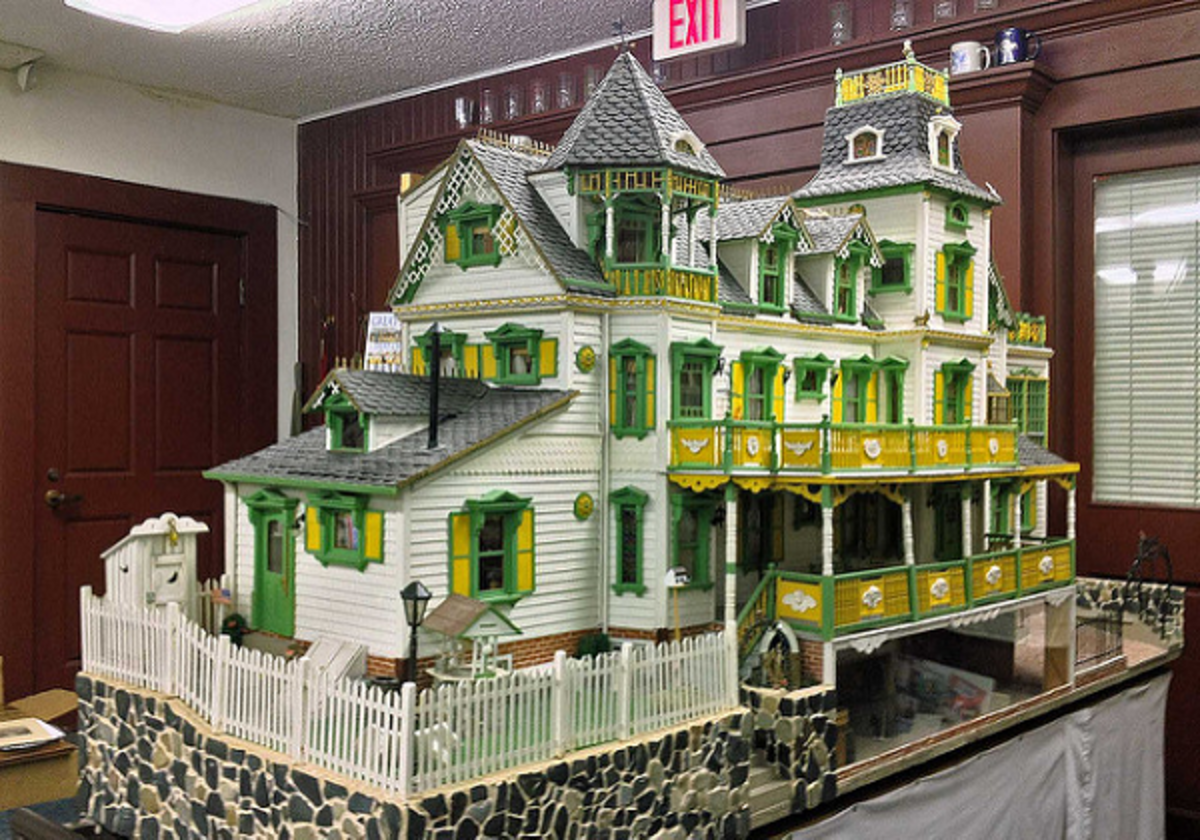
A collector's item: a Victorian-style miniature house with details typical of the 19th-century homes of the wealthy.
Famous Miniature Houses
- Some notable and priceless miniature houses include:
- Stettheimer Dollhouse, constructed between 1916 and 1935
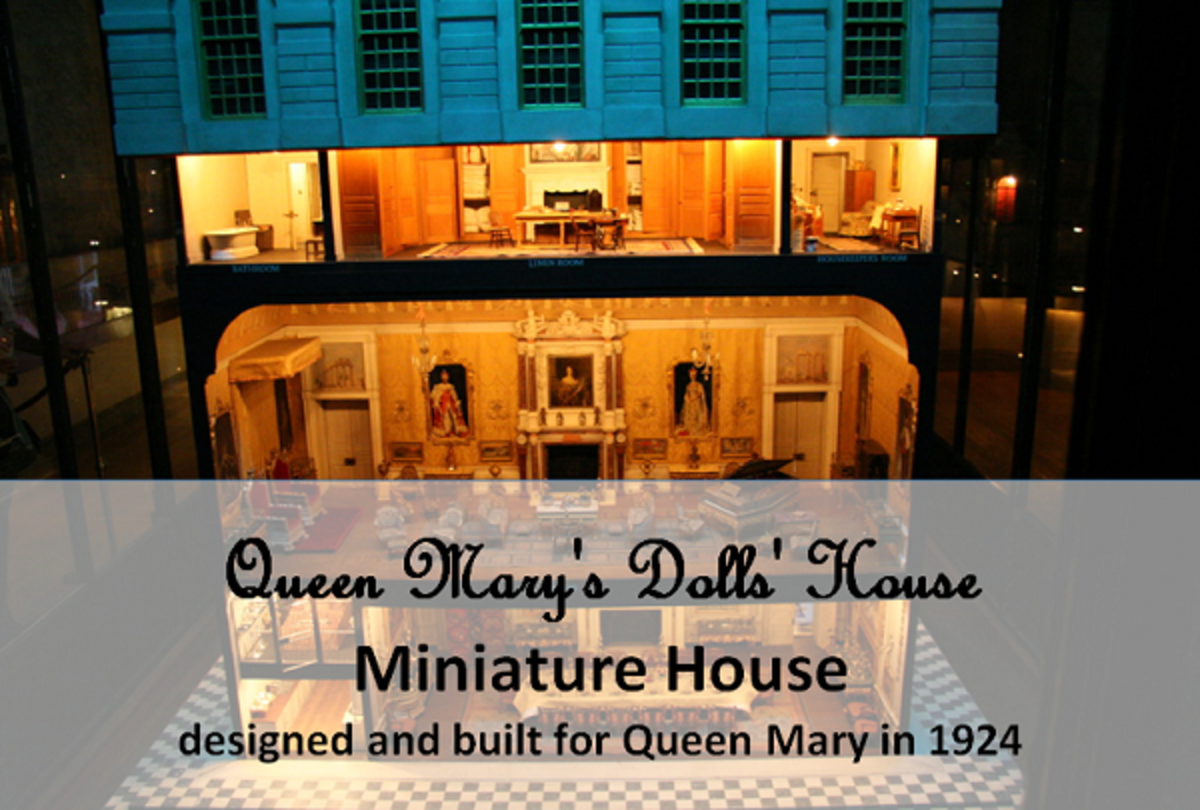
- Queen Mary's Dolls' House, designed for Queen Mary in 1924
- Titania's Palace, hand-built by Irish cabinet-makers
- Tara's Palace, which took ten years to build and consists of 22 rooms
These breathtaking works of handcrafted art are cherished collectors’ items that date back hundreds of years. Today’s enthusiasts and crafters who have invested in these types of collectables can successfully sell these mementoes for great sums of money.
There are dozens of annual miniature trade shows organised by miniature collectables organisations. At these shows, craftspersons, dealers, and collectors display and sell miniatures worthy of becoming priceless and treasured heirlooms.
Mini Furniture and Furnishings
In my opinion, the most attractive miniature homes are the ones that come complete with everything that is required in a household, with or without tiny people. Everything from furniture, furnishings, appliances, fixtures, and vanities to plush sofas and accent chairs must be included in the interior rooms.
Additionally, these houses feature items like chandeliers, refrigerators, kitchen sinks, bathtubs, towels, toilet roll holders, and even bowls of fruit. Many of these elements are even more intricately crafted than the house structure itself.
Furniture Styles
As the types and styles of the dollhouses vary, so do their furniture styles. The entire interior decoration is determined by the building occupants' social stratum, and the pieces are based on their lifestyles: rich and luxurious, middle-class and comfortable, or poor and threadbare.
For instance, a miniature farmhouse will have the barest essentials of country furniture and furnishings, while a sleek modern house may feature streamlined sofas, Le Corbusier chairs, wood panelling, leather loungers, glass tables, wool rugs, and ’expensive’ wall art.
Standalone Furniture Pieces
Some miniature furnishings collectors only collect individual furniture pieces. They use these beautifully crafted pieces to create living areas, dining rooms, bedroom settings, etc. (contemporary or traditional), which they display on coffee tables, wall shelves, and special display stands and units.
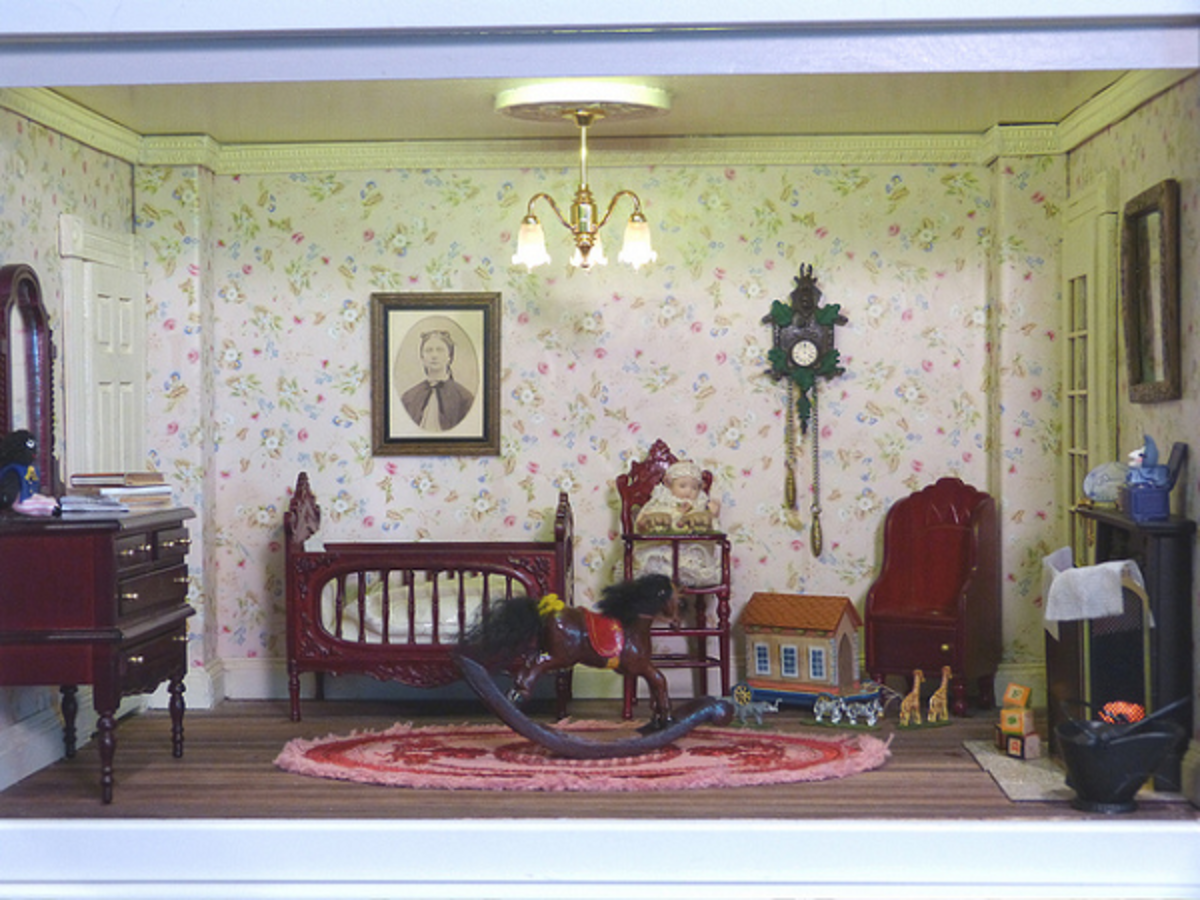
A miniature Victorian-style nursery interior. Notice the furniture, a little baby sitting on a high chair, a crib, and a rocking horse.
Miniature House or Standalone Rooms?
Not all miniature home collections come as complete residential building structures that comprise external walls, windows, doors, and interior and outdoor rooms. They can also come as single standalone rooms, two-room designs, and storey buildings enclosed with three walls and an exposed front opening to view the interior.
While standalone rooms are easier to build, take less time to craft, and are generally less expensive to make (depending on how simple or complex it is), a miniature house can take many months or even years to build, and it, therefore, comes with an expensive price tag.
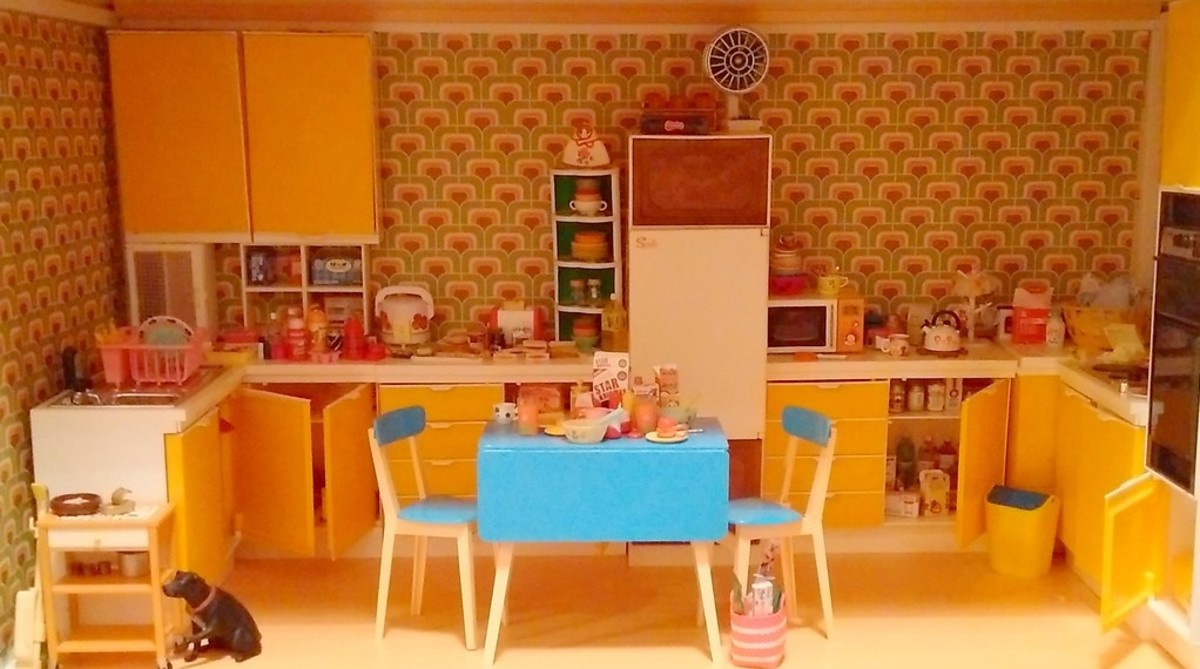
Standalone miniature room: a fully furnished kitchen with mini elements and features.
Modern Dollhouses
Not many modern-day hobbyists like the old ornate classics like the Edwardian, Victorian, and Tudor styles. Many fans will rather opt for modern architectural and interior styles because of their clean lines and sleek minimalist interiors.
Why People Love to Collect Miniatures
Miniatures are intriguing objects; they're beautiful works of art that always tell a unique story. Museums and other exhibitors of miniature objects attest to the fact that these collections are extremely popular among visitors. It is amazing how spellbound viewers appear on seeing this category of miniature art, from the Gothic theme to the Victorian, from the first settlers’ cabin to contemporary models.
If you are a collector or die-hard enthusiast, you will agree that making miniatures is a painstaking hobby that requires creativity, patience, perseverance, and a deft and nimble touch. If you love and admire them, it is because you are in awe of how anyone can craft such minuscule objects and tiny parts.
And because the craft involves making exact prototypes of buildings, humans, interiors, furniture, and furnishings, the craftsman’s pieces must be detailed and crafted to the right scale. They must look realistic enough to be enchanting, captivating, and delightful.
Tips for Beginner Crafters and Collectors
If you want to start collecting miniature dollhouses, you can have them custom-made to your specifications, or you can purchase them from toy shops or speciality stores for miniature collectables online. You will also find them at internet auction sites and online retailers.
To build or gradually collect the pieces for a fully furnished dollhouse, here are some pieces of advice:
- Start by building a simple, standalone room and furnish it in a way that tells a story.
- For a traditional style, go for the impressive classics like a Victorian parlour or a farmhouse kitchen.
- Make your house look live-in by adding occupants (miniature dolls) that will fit in perfectly with your theme. Dress them up appropriately and place them in the room. For instance, add a parlour maid serving tea to the lady of the house.
- Ensure that your structure is as detailed as possible. Everything within it must have the right scale and proportions.
- Display your home with ample space around it, preferably in an area set away from the walls. This is to ensure that observers will have a good view of the house from all sides.
- For individual standalone rooms, a smaller display area will suffice. The structure can be set against a wall or on a shelf as it only needs to be viewed from the front.
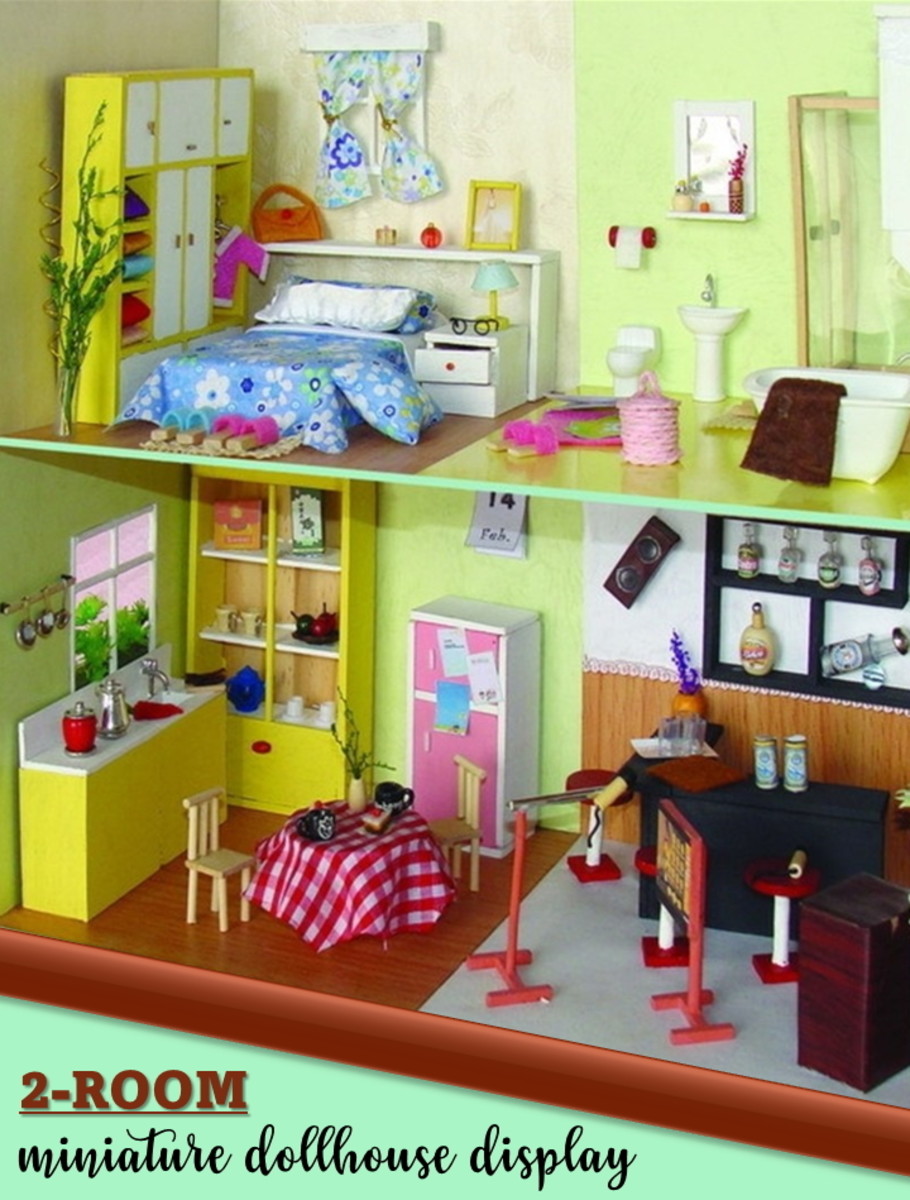
A two-room miniature house with simple furniture and furnishings. A beginner miniatures crafter can start off with projects as simple as a 1 or 2-room space to gain the required skills.
Start Simple
Crafting miniature pieces is not easy. It is a craft that will test your patience, so if you do not wish to encumber yourself with an overly challenging task, start simple.
You do not have to be a skilled craftsman, though. There are miniature home kits that you can purchase if you are not a collector but wish to build. Also, an increasing number of miniature manufacturers are producing tiny dollhouses, furniture, and furnishings for people who wish to create fantasy homes.
(Article originally published by the author on hubpages.com on 02/24/10)
Articles of Interest